
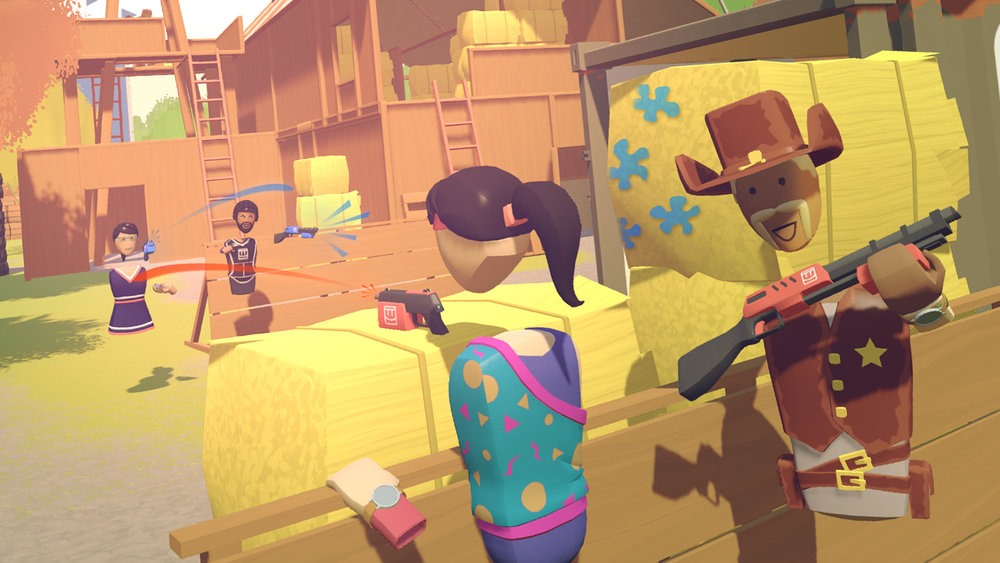
Rec Room, a Seattle-based social virtual world that raised $294 million and briefly reached a $3.5 billion valuation, will shut down on June 1, 2026, the company announced yesterday. Snap Inc. confirmed the same day that it has acquired select assets from the company.
“Despite this popularity, we never quite figured out how to make Rec Room a sustainably profitable business,” the company said in the announcement. “Our costs always ended up overwhelming the revenue we brought in.”
For the broader metaverse industry, the closure is another stark reminder that user growth without a working revenue model is not a business.
Snap picks up the pieces
Snap confirmed that it acquired select assets from Rec Room, and that some Rec Room employees will be joining Specs Inc., the Snap hardware subsidiary working on its Spectacles augmented reality glasses, according to GeekWire. Snap said it was drawn to the Rec Room team’s expertise in building social, multiplayer XR experiences.
Neither company indicated that Rec Room would be revived at Snap in its current form, GeekWire reported. Nick Fajt, Rec Room’s co-founder and CEO, said he was “very proud of the team,” thankful to the community, and excited about what’s next.
From $3.5 billion to zero
Rec Room raised $145 million in its December 2021 Series F round, bringing its total valuation to $3.5 billion, the company announced at the time. The round was led by Coatue Management, with Sequoia Capital, Index Ventures, and Madrona Venture Group also participating. Total funding across all rounds reached $294 million, according to research firm Sacra.
The company cut staff twice before calling it quits. In March 2025, Fajt announced a 16 percent reduction in headcount, saying the company had to cover its own costs without relying on additional investment, according to a Rec Room blog post.
Then in August 2025, the company laid off half of its staff.
After the August layoffs, Fajt published an unusually candid breakdown of the company’s finances.
UGC revenue was growing 70 percent year over year, Fajt said at the time, but the economics were punishing: when a player bought a UGC item, Rec Room kept only about 30 cents on the dollar after paying platform fees and creator cuts, compared to 70 cents on items the company made itself, according to that post. He said the company had runway projected into 2029.
It didn’t make it.
What’s shutting down — and when
Effective immediately, Rec Room has stopped allowing new account creation, new friend additions, and new sign-ups for its Rec Room+ subscription service. After May 1, players will no longer be able to purchase tokens. After May 18, creators will no longer be able to earn new tokens. A final creator payout will be processed on June 1, according to the announcement.
On June 1, players will no longer be able to log in, the rec.net website will go offline, and online services related to Rec Room Studio will cease, the company said. As a farewell gesture, the company discounted first-party content by 80 percent and unlocked many Rec Room+ subscription features for all users at no charge.
Saving your creations
Creators cannot download working copies of their rooms, but can export room and invention data in formats compatible with other tools, such as Unity, allowing them to potentially rebuild their work on other platforms, the company said. That export feature is available only through the Steam PC build and was in final internal testing as of the announcement, with availability expected within about a week.
Players can download their photos and a “final report card” avatar memento.
A broader pattern
The Rec Room closure comes as Meta retreated from its own virtual social platform. As of June 15, Quest headset users will lose access to Horizon Worlds entirely and the ability to create or publish VR content will end, leaving only the mobile version of the app active. You can read more about it in our previous story here.
Rec Room had been making progress on its creator economy before the end. In September 2025, the company announced that creators had earned more than $1 million in a single quarter for the first time — a milestone that had taken the entire year of 2021 to reach when the program first launched.
My take-away from all this? That creators should be wary of putting their eggs into one basket, especially one with a closed, proprietary ecosystem. There’s a reason we have the World Wide Web instead of America Online.
It will be nice to see an open alternative for the metaverse. Maybe, once AI coding gets a bit better, we can upgrade OpenSim for the new era?