

Bitcoin card rewards represent an evolving segment of the cryptocurrency payments industry, combining Bitcoin cashback, credit card rewards and digital asset loyalty programmes with traditional payment infrastructure. For issuing banks, fintech companies and institutional investors, Bitcoin card rewards introduce important questions surrounding interchange fees, customer acquisition costs, cryptocurrency conversion, programme profitability and long-term financial sustainability. This institutional analysis examines how Bitcoin cashback programmes operate, how rewards are funded and distributed, and how payment processors, card issuers and custodians manage liquidity, regulatory compliance and operational risk.
Bitcoin card rewards are calculated like conventional card rewards. An issuer or rewards administrator applies a stated rate to eligible purchases, checks eligibility and caps, and then credits the value. The difference is what happens next: someone must buy, hold, or route Bitcoin to the cardholder, and that step adds custody, liquidity, and price risk that points and cash programmes do not carry.
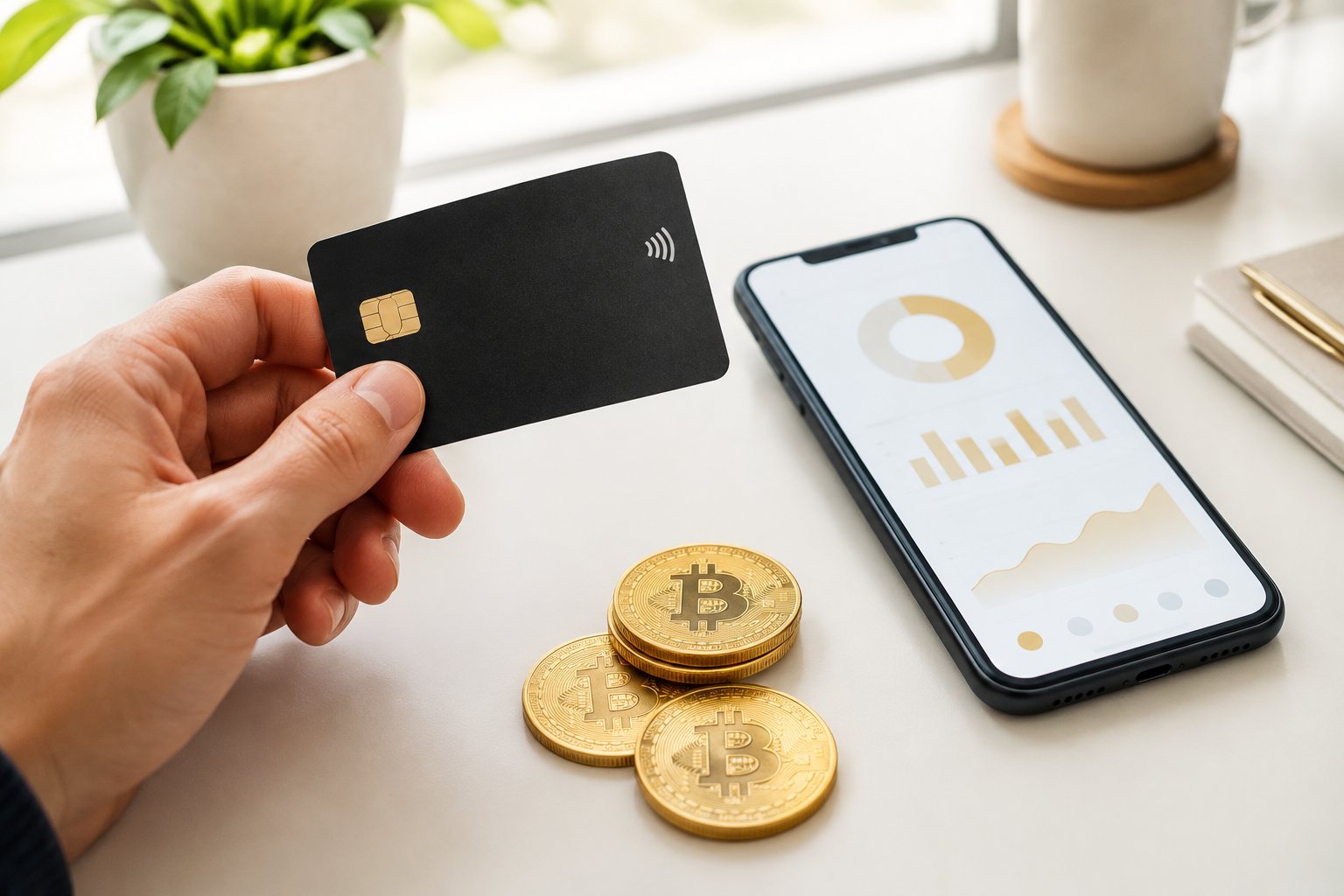
For issuers and programme managers, a Bitcoin rewards programme is commercially workable only when the advertised rate is funded by more than interchange alone. That means pairing interchange with membership fees, balance-linked tiers, merchant-funded offers, or exchange revenue, and booking the Bitcoin purchase and reversal exposure as a real cost. Coinbase’s published terms show this design clearly: they tie higher rates to a cardholder’s assets on the platform and cap the boosted rate at a monthly spend level.
For a payments strategy team, this changes the question. Whether cardholders want Bitcoin back is only part of it. The larger issue is who funds each basis point, who holds the asset, and who absorbs losses when a purchase is refunded after the reward has already been paid.
Key Takeaways
- Advertised Bitcoin reward rates are usually subsidized by revenue beyond interchange.
- Reward timing, custody, and reversal rules create the main operating risks.
- Named programme terms are dated snapshots and should never be treated as permanent.
Executive Summary
Bitcoin rewards programmes sit on standard card infrastructure, with a digital-asset layer added on top. The issuing bank, processor, and network handle the card transaction. A rewards administrator, often an exchange or fintech, calculates the reward and delivers Bitcoin, either from its own inventory or through a liquidity partner.
Four points shape the economics:
- Funding: Interchange on U.S. consumer credit cards is shared across the issuer, programme manager, and other parties. At rates of 2% or higher, the remaining share is unlikely to cover the reward by itself.
- Denomination: A reward calculated in dollars and then converted to Bitcoin carries different risk from one that is fixed in Bitcoin at the time of purchase.
- Liability: Undelivered or unvested rewards are a balance-sheet obligation, and that obligation moves with the Bitcoin price.
- Reversals: Refunds and chargebacks need a defined clawback path, because Bitcoin already delivered may have changed in value or left the platform.
Programmes that succeed commercially treat rewards as a funded financial product with controls. Programmes that treat rewards as a marketing line item tend to see costs grow faster than revenue.
How Are Bitcoin Card Rewards Earned and Paid?
A Bitcoin reward moves through four stages: a dollar-value calculation at purchase, an eligibility check, a conversion into Bitcoin, and delivery to a wallet. The order of these stages, and the timing between them, determines who carries price risk and how refunds are handled.
Bitcoin-Denominated Cashback vs. Fiat Rewards Converted to Bitcoin
There are two basic designs. In the first, the reward is valued in dollars and then used to buy Bitcoin. Coinbase’s rewards terms, for example, state that all bitcoin rewards will be rounded to the nearest cent in U.S. dollar value. Gemini describes rewards that are purchased and held on the Gemini Exchange account before cardholders can hold, sell, or move them.
In the second design, a cash-back balance is earned and the cardholder chooses whether to convert it. CNBC Select described the Venmo Credit Card as letting users automatically purchase Bitcoin, Ethereum, Litecoin, or Bitcoin Cash with cash back. Under that model the platform carries no Bitcoin exposure until the cardholder chooses to convert. A third variant, used by the former BlockFi card, issued proprietary points that the cardholder later converted into a chosen asset.
From Eligible Purchase to Reward Allocation and Distribution
Eligibility rules decide which spend earns rewards at all. Coinbase excludes several categories, including cash equivalents, gift cards, gambling, peer-to-peer transfers, and the Coinbase One membership fee itself. Its tiered rate runs from 2.0% to 4.0% depending on assets held, and higher tiers apply only to the first $10,000 in eligible monthly purchases.
Distribution timing varies by programme. Some platforms credit Bitcoin at authorization or settlement. Others wait until the statement closes. Crediting earlier improves the customer experience but increases exposure to reversals.
When Do Reversals Change the Reward Balance?
A refund or chargeback should reduce the reward the cardholder has earned. The operational question is how. If the Bitcoin has not yet been delivered, the platform can cancel the pending credit.
If the Bitcoin has already been delivered, the programme needs one of three options:
- a contractual right to deduct the reward from the customer’s account,
- a negative reward balance netted against future rewards, or
- an accepted write-off.
Each choice should state whether the reversal is valued at the original dollar amount or at the original Bitcoin quantity.
Who Operates the Rewards Infrastructure?
Responsibility is split between regulated card participants and digital-asset participants. The reward is often contractually separate from the card account.
Issuer, Processor, Network and Programme-Manager Responsibilities
The issuing bank extends credit or holds deposits and owns the cardholder relationship in legal terms. Fold’s agreement states that its card is issued by Celtic Bank, powered by Stripe, and operates on the Visa network, with Fold acting as servicer. Coinbase’s terms name First Electronic Bank as issuer and Cardless, Inc. as servicer, while Coinbase administers the rewards.
Visa and Mastercard set the network rules, interchange schedules, and dispute frameworks. The processor handles authorization and clearing messages. The programme manager runs onboarding, the app, and servicing, usually under the bank’s oversight.
Custodian, Liquidity Provider and Rewards-Platform Responsibilities
The rewards platform buys or allocates Bitcoin, keeps the reward ledger, and credits wallets. A custodian holds the assets, and a liquidity provider supplies Bitcoin at a quoted price. The rewards platform and the custodian are frequently the same exchange.
Gemini’s support page shows the impact of this separation in practice. Rewards held in the exchange account are not affected by closing the card, but closing the exchange account also closes the card.
How Card Type Changes the Transaction and Funding Flows
Card type changes both the revenue available and the funding source:
- Crypto credit cards earn credit interchange and potential interest income. Purchases are funded by a credit line in dollars.
- Crypto debit cards earn lower regulated or unregulated debit interchange, depending on issuer size. A purchase may require selling digital assets at the point of sale, which adds a separate conversion flow alongside the reward flow.
Where Does the Money for Rewards Come From?
Rewards are funded by a stack of revenue sources, and interchange is only one layer of that stack.
Why Interchange Alone May Not Cover the Advertised Rate
Interchange is paid by the merchant’s acquirer to the issuer. It is then shared with the programme manager and reduced by network, processing, and fraud costs. The net share available for rewards depends on the bank and programme agreement, and these figures are rarely disclosed.
A flat rate of 2% or more is therefore likely to depend on other revenue. Fold’s credit card, for example, advertises up to 3.5% back on every purchase. At that level, the economics need to be modelled against the programme’s full revenue base, including subscriptions and other products.
Annual Fees, Membership Revenue and Merchant-Funded Offers
Membership fees create predictable revenue to fund rewards. Coinbase links its card to a Coinbase One subscription, and its asset-based tiers encourage cardholders to keep balances on the platform, which can generate trading and custody revenue.
Merchant-funded offers move reward cost to the merchant. Promotional boosts, which Coinbase’s terms reserve the right to offer at its discretion, can be funded by partners or offered only for a limited time.
Conversion Spreads, Token Incentives and Their Economic Trade-Offs
When a platform buys Bitcoin internally at a spread, it can recover part of the reward cost. That spread should be disclosed. Platform tokens such as CRO shift the reward cost into the platform’s own token. Crypto.com let credit cardholders choose BTC or CRO starting May 19, 2026. Paying rewards in Bitcoin reduces token-concentration risk, but it requires buying a third-party asset with real cash.
What Makes a Programme Profitable?
A programme is profitable when the revenue a cardholder generates over their lifetime exceeds the cost of acquiring them, the cost of their rewards, and the losses tied to their account. The tools below are frameworks to apply to a programme’s own data.
An Institutional Rewards Economics Comparison Table
| Factor | Fiat-converted BTC | BTC-fixed at purchase | Platform token | Cash/points |
|---|---|---|---|---|
| Price risk to issuer | Low after purchase | High until payout | Token issuer bears it | None |
| Custody required | Yes | Yes | Yes | No |
| Reversal complexity | Medium | High | Medium | Low |
| Liability valuation | Dollar-fixed | Market-marked | Market-marked | Dollar or breakage-based |
| Ecosystem revenue link | Strong | Strong | Strongest | Weak |
An Illustrative Unit-Economics Calculation with Stated Assumptions
Every figure below is a hypothetical assumption. None of it is observed programme data.
- Annual eligible spend per active account: $18,000
- Net interchange retained by the programme: 1.5% = $270
- Reward rate: 2.0% = $360
- Bitcoin acquisition and custody cost: 0.1% = $18
- Fraud, servicing, and reversal losses: $40
Under these assumptions, the account produces a contribution of negative $148 before any other revenue. Closing that gap would require roughly $148 per account per year from membership fees, interest, or platform revenue. If the cardholder repays in full every month and does not use other products, the gap stays open.
Acquisition Cost, Lifetime Value and Outstanding Rewards Liabilities
Lifetime value should include revenue from cross-selling, such as trading, custody, and subscriptions. It should also subtract the rewards liability. Unredeemed rewards that are held in Bitcoin must be marked to market. A sharp price increase therefore raises the cost of any rewards that are still owed.
Scale changes the size of this exposure. Blockworks reported that Fold had distributed more than $83 million in bitcoin rewards across its products.
An Implementation Checklist for Commercial and Operating Readiness
- Signed bank, processor, and network approvals that cover the rewards structure
- A documented funding source for every basis point of the reward rate
- A chosen denomination model, with defined conversion timing
- A licensed custodian and liquidity agreements with backup providers
- A reward ledger that reconciles daily to custody balances
- A clawback policy written into the rewards terms
- Tax reporting and valuation records kept for each cardholder
- An abuse model covering manufactured spend and multiple accounts
How Do Bitcoin Rewards Compare with Other Loyalty Models?
Bitcoin rewards trade the predictable cost of cash and points for higher engagement and a stronger link to the platform’s ecosystem. That trade adds operational burden, which the frameworks below make visible.
Bitcoin, Other Crypto, Cash and Points: A Like-for-Like Framework
A fair comparison sets a single dollar cost per $100 of spend and then compares four things:
- delivery cost,
- volatility borne by each party,
- breakage (rewards never redeemed), and
- revenue retained in the ecosystem.
Points programmes benefit from breakage and flexible redemption values. Bitcoin rewards offer little breakage once they are delivered. Bitcoin’s volatility is also far higher than fiat currency volatility. Springer research found it was almost 10 times higher than major exchange rates. Other assets, such as Litecoin, Bitcoin Cash, or CRO, add liquidity and listing risks of their own.
Credit, Debit and Dual-Mode Cards Are Not Interchangeable
Credit products affect the cardholder’s credit score and bring lending disclosures, APR, and repayment risk. Fold’s agreement, for example, lists a variable APR of 20.49% to 29.49% as of September 17, 2026, along with late fees of up to $30.
Debit and prepaid products such as the Nexo Card or Bybit Card have lower interchange but may earn spread revenue on asset sales. Dual-mode cards need two separate economic models. They should not be blended into a single average.
Using Named Programmes as Examples Without Treating Terms as Permanent
The Coinbase One Card, Gemini Credit Card, Crypto.com Visa Signature Credit Card, and Fold card each illustrate a different structure:
- Coinbase One Card: tiers based on assets held
- Gemini Credit Card: rewards held in a separate exchange account
- Crypto.com Visa Signature Credit Card: a choice between a token and Bitcoin
- Fold card: a fintech servicer supported by a bank and processor
Rates, fees, and eligibility rules change over time. Any figure here should be read as dated to its source.
How Are Rewards Held, Reconciled and Redeemed?
Rewards are held in custodial accounts by default. Withdrawal, sale, and on-platform holding form the main redemption paths.
Custodial Accounts, Wallet Access and Private-Key Controls
In the custodial model, the platform holds the private keys and the cardholder holds a claim against the platform. Programmes offering direct payout to self-custody wallets shift asset control to the cardholder. In exchange, they take on payout routing and network-fee costs.
Infrastructure vendors such as Lightspark describe payouts to custodial or self-custody wallets through one API. That reduces engineering work, but it adds a third-party dependency.
Reward Ledgers, Reconciliation and Redemption Paths
The reward ledger must tie three records together:
- card settlement files,
- reward calculations, and
- on-chain or custodial balances.
Reconciliation breaks commonly come from partial refunds, merchant category changes, and rounding. Redemption to dollars, as in Gemini’s sell-and-withdraw flow, creates a taxable event for the cardholder and generates trading revenue for the platform.
What Digital-Wallet Integration Does—and Does Not—Change
Apple Pay and Google Pay tokenize the card for payment. They do not change how rewards are calculated, funded, or held. The rewards logic still keys off the underlying card transaction. Tokenized transactions may follow different interchange or merchant-category paths, and the rules should be checked for each programme.
How Does Bitcoin Volatility Affect Rewards Economics?
Volatility creates exposure in any gap between the moment a reward is valued and the moment the Bitcoin is acquired. It also affects any rewards liability held in Bitcoin.
The Exposure Between Purchase, Conversion and Payout
If a reward is fixed in dollars and Bitcoin is bought at the time of crediting, the platform’s exposure lasts only minutes. If a reward is fixed in Bitcoin at purchase but delivered after the statement closes, the platform is effectively short Bitcoin for that whole period. A price rise during that window increases the cost.
Treasury Reserves, Hedging Choices and Counterparty Risk
Treasury teams have three main options:
- pre-buy inventory,
- buy just in time, or
- hedge with derivatives.
Each choice introduces a different counterparty. Inventory adds custodian risk. Just-in-time buying adds liquidity-provider and pricing risk. Hedging adds exposure to the derivatives venue and the margin it requires. Reserve policy should be documented, sized to the outstanding liability, and approved by the bank partner where its agreement requires that.
Which Disclosure and Compliance Duties Apply?
Disclosure and compliance duties come from consumer-credit law, card-network rules, and digital-asset regulation. The specific duties depend on the jurisdiction and the programme’s structure.
Explaining Reward Value, Fees, Eligibility and Changes to Terms
Programme materials should state four things clearly:
- how the reward is valued,
- when it is credited,
- which purchases are excluded, and
- how terms can change.
Fee disclosures should cover foreign transaction, ATM withdrawal, conversion, and network fees where they apply. Coinbase states, for example, that its card may not be available in all states and that eligibility can change.
Tax Treatment, KYC/AML and Sanctions Controls
How rewards are taxed depends on their characterization under current IRS guidance. Programmes should keep a fair-market valuation for each credit and confirm the reporting treatment with tax counsel.
Digital-asset rewards platforms need KYC, AML, and sanctions screening, in addition to the controls the card issuer already runs. U.S. money-transmission licensing at the state level may also apply to the custody and transfer of rewards.
Why Jurisdiction, Issuer and Product Structure Matter
The same rewards design can face different rules in the United States and the European Economic Area (EEA). In the EEA, MiCA authorization and interchange caps change both the licensing route and the funding available for rewards. The issuer’s charter and the network region also affect which rules apply. Current authoritative sources should be checked before launch.
How Should Programmes Control Losses and Abuse?
Controls should target authorized but manipulative behaviour as well as unauthorized fraud. These two problems need different tools.
Fraud, Reward Gaming, Chargebacks and Clawbacks
Reward abuse often involves legitimate transactions, so it is a different problem from payment fraud. One analysis notes that traditional fraud engines often miss reward abuse and recommends:
- velocity caps,
- cooldown periods, and
- excluding reversed transactions from rewards.
Coinbase’s terms illustrate the clawback route. They reserve the right to recover rewards from account assets in cases of manufactured spend, and they list opening multiple accounts as one example. Mastercard has also published guidance on preventing promo abuse and loyalty program fraud.
A Programme Risk Matrix for Financial and Operational Exposures
| Risk | Likelihood driver | Impact | Primary control |
|---|---|---|---|
| Funding shortfall | Rate above net interchange | High | Revenue stack, monthly caps |
| Price exposure | Delayed conversion | High | Just-in-time buying, hedges |
| Reversal loss | Early crediting | Medium | Pending periods, clawback rights |
| Manufactured spend | Flat high rates | Medium | Exclusions, velocity rules |
| Custodian failure | Concentration | High | Diligence, segregated accounts |
| Partner termination | Bank or network review | High | Contingency and migration plan |
Evaluating a Sustainable Bitcoin Rewards Programme
A sustainable programme can show where each basis point of its reward rate comes from, who holds the asset, and how losses are absorbed when purchases reverse. The published terms from Coinbase, Fold, and Gemini show three working patterns:
- tiers based on assets held, with monthly caps,
- a fintech servicer supported by a bank and processor, and
- custody kept separate from the card account.
Each pattern still depends on revenue beyond interchange. Before approving a programme, decision-makers should test:
- the dollar-versus-Bitcoin timing of rewards,
- reversal terms,
- custody arrangements,
- the reserve policy, and
- any gap in the unit economics.
Card-Bitcoin’s independent research on issuer economics and settlement infrastructure is intended to support that kind of diligence, using dated and sourced terms.
Institutional Benchmarking: Bitcoin Card Rewards and Market Competition
Institutional analysis of Bitcoin card rewards should distinguish sustainable programme economics from consumer marketing incentives. Products such as the Crypto.com Visa Card and Coinbase Card illustrate different approaches to cryptocurrency-linked payments and rewards, while conventional credit card rewards provide an important benchmark for issuer profitability, interchange revenue and customer retention. Consumer comparisons of the best crypto cards often emphasize cashback percentages, promotional benefits and spending incentives. However, institutional programme managers must evaluate the underlying funding model, crypto-to-fiat conversion costs, custody arrangements, compliance obligations and long-term sustainability of rewards liabilities. These factors determine whether Bitcoin cashback programmes can remain commercially viable beyond introductory promotions.
Frequently Asked Questions
How does a Bitcoin rewards credit card pay out rewards?
The rewards administrator calculates a dollar value on each eligible purchase, then buys or allocates Bitcoin and credits it to a custodial account. Timing varies by programme: some credit at settlement, and others wait until the statement closes.
Is Bitcoin cashback paid in Bitcoin or converted from cash rewards?
Most programmes calculate the reward in dollars and then convert it into Bitcoin. Some instead let cardholders choose whether to convert a cash-back balance. Which model applies determines who carries the price risk.
Can interchange revenue fund a Bitcoin card’s advertised rewards rate?
Rarely on its own, once interchange has been shared with partners and reduced by costs. Rates of 2% or higher usually also rely on membership fees, interest, merchant offers, or platform revenue.
What costs should issuers include when assessing Bitcoin rewards?
Issuers should include:
- the reward cost,
- Bitcoin acquisition spreads,
- custody fees,
- servicing costs,
- fraud and reversal losses,
- hedging or reserve costs,
- acquisition spend, and
- the marked-to-market value of outstanding rewards owed.
How do refunds and chargebacks affect Bitcoin rewards?
A refund or chargeback should reverse the related reward, either by cancelling a pending credit or by deducting the value from the account. The rewards terms should state whether the reversal uses the original dollar value or the original Bitcoin amount.