

[ad_1]

Follow ZDNET: Add us as a preferred source on Google.
ZDNET’s key takeaways
- Smart plugs can automate dumb devices, but they shouldn’t power everything.
- Devices you can connect include lamps, chargers, fans, string lights, and TVs.
- Skip smart plugs for devices that heat up, have a compressor, or are over 1,500W.
Smart plugs have some pretty great uses around the house, but they’re not meant to handle every single electrical device in your home. Using a smart plug incorrectly can lead to dangerous situations, including tripped circuits, damaged plugs, and even house fires. Knowing which devices can and can’t be used with smart plugs is vital.
Also: Your smart plug is seriously underutilized: 7 ways I’ve programmed mine to automate my home
Generally, smart plugs are rated for a maximum power draw of 15A, so you should never use a smart plug for anything that draws more than that, like heavy appliances. Aside from amperage, there are other risks to consider before using a smart plug. These include unpredictable appliances, those that generate heat, and those that are high priority.
5 devices you should never plug into a smart plug
Note: Always check your smart plug’s specifications and instructions to ensure you follow the manufacturer’s guidance before using it.
1. Heavy-duty appliances and devices
Most smart plugs are rated for 15A, making them suitable for lamps, televisions, computers, fans, and other household devices. Even if you plug a smart plug into a 20A receptacle, its limit will remain at 15A, so you can’t use it for heavier appliances, like full-size refrigerators and many A/C units.
Even if a heavy-duty appliance is turned on with a smart plug, you’ll be pushing the plug to its limits, which can trip it, overheat its internal components, and degrade it over time. A high current can cause excessive heat at connection points, and many inexpensive smart plugs can’t dissipate it effectively. If your smart plug emits a burnt smell or shows warping or burn marks, it means heat is building up inside, and you should not use it with that appliance.
Also: Shelly Smart Plug review: A cheap TP-Link alternative that’s seriously versatile
Homes typically have mostly 15A outlets, with a few 20A circuits in areas where they are most needed, like kitchens, bathrooms, laundry rooms, and garages. A 15A receptacle is allowed in a 20A circuit, as long as there are multiple outlets in that circuit. Some appliances require true 20A outlets with a T-shaped slot, but a 15A smart plug won’t exceed its capacity.
What you should do instead
- Check your devices: Common devices for which you should check the specifications before using with a smart plug include space heaters, window air conditioners, deep freezers, refrigerators, microwaves, and hair dryers. You should also check the amperage (10-15A, depending on the smart plug) and wattage (1,200W-1,800W) for both the device and smart plug before plugging it in.
- Upgrade when it makes sense: If controlling your device remotely with a smart component is important to you and you’re OK with replacing them, it may be worth looking for devices that are already smart.
2. Critical and continuous use devices
If you have critical medical devices that need to be plugged in continuously, you should never use a smart plug with them. These include oxygen equipment, life-support machines, CPAP machines, and other essential medical gear.
What you should do instead:
- Skip the smart plug: People who use these devices require a reliable connection, and even a brief disconnection could be dangerous. Because smart plugs can be accidentally turned on or off due to a forgotten routine or a voice-control misunderstanding, just plug them directly into the wall outlet.
Also: Why this $7 smart plug beats any other that I’ve tested in my home
3. Power strips
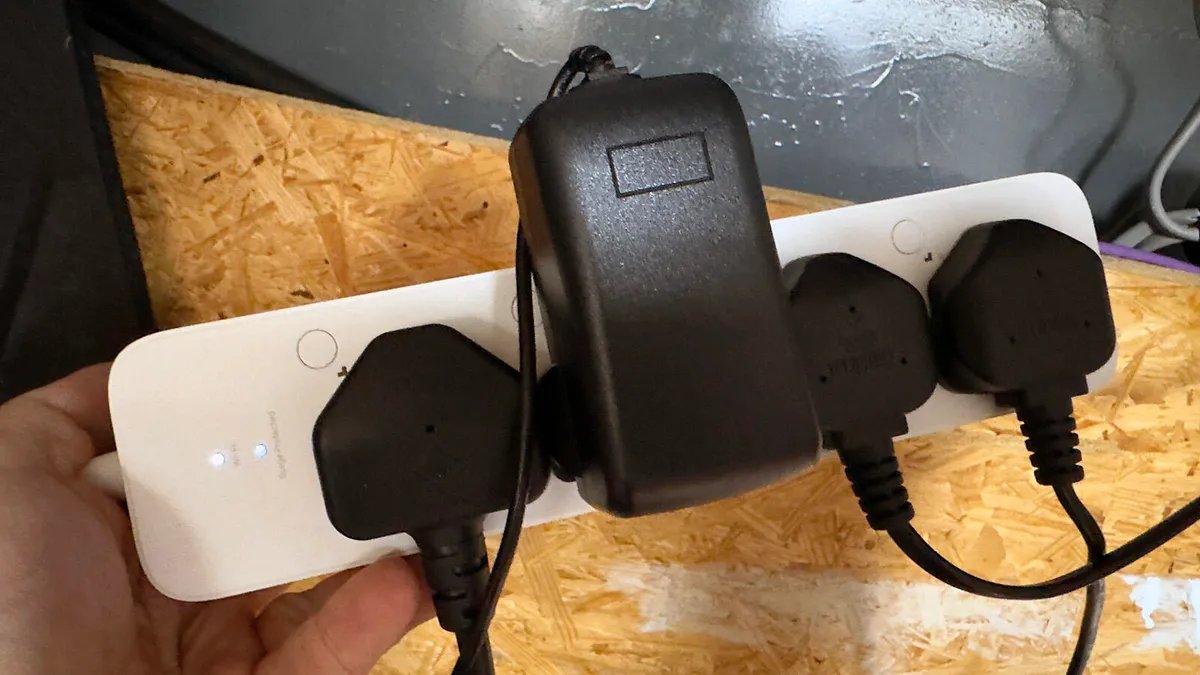
Unlike critical and medical devices, power strips are more of a case-by-case decision. The biggest problem with plugging your power strip into a smart plug is inadvertent load stacking, which is when you add multiple devices to a power strip and their electrical load adds up to an excessive total. When you add multiple devices to your power strip, it’s easy to lose track of each one’s load and how they add up.
Also: 4 interior designers told us what smart tech you should actually buy
The smart plug processes the total current the power strip needs, whether it’s one or five devices drawing 400W, so it’s easy to exceed the plug’s limit. If you do, heat will build up within the smart plug, and failure is possible.
What you should do instead
- Check your devices’ load: A power strip and smart plug combination can work perfectly when used only for low-power devices, those with a combined load that doesn’t exceed 1,400W. These include lamps, chargers, televisions, and small fans.
- High-power goes to the wall: If you need to plug in a heavy-duty appliance or a high-power device, make sure to plug it directly into your wall outlet.
- Plug your power strip directly: Skip the smart plug for your power strip — just plug it directly into the wall to avoid accidental overloads.
4. Heating devices
Plugging a heat-producing device into a smart plug carries some of the same risks as plugging a heavy-duty device into one, but it also poses greater dangers. Plugging a hot tool into a smart plug may sound like a good idea, since you can turn it off remotely in the event you forgot to unplug it — but this can also present its own problems.
Certain coffee makers, toasters, ovens, hot plates, heating pads, and hot hair styling tools should not be used with a smart plug. Here’s why:
- Extreme heat shouldn’t be automated: Hot tools and devices can cause a fire that can become unmanageable when left unattended. A person using a heating device knows not to turn it on when it’s on a towel or near water, but a smart plug doesn’t. Hot hair tools, for example, are one of the leading causes of house fires.
- Avoid accidental activation: Never use a smart plug on a device that heats up as soon as it’s plugged in, like many hot hair tools. Smart plugs can be activated remotely from your phone, voice control, or even an automation or routine. They can also be subject to glitches. Considering how often Alexa misunderstands me and turns on the wrong things in my home, I’m all too aware of the risk.
- It heats up and exceeds limits: Some heating devices may not exceed the smart plug’s limits at all times, but they can have wattage spikes that do. Check your device’s details to determine how much power it draws at high temperatures.
Also: 10 useful smart home gadgets that make life so much easier (and most are discounted)
What you should do instead
- Buy safer devices: I keep some heating devices on a smart plug, but I ensure they’re ones that require someone to physically turn them on after they’re plugged in, and that have an auto-off feature after a certain amount of time. I also only use smart plugs for devices that don’t draw too much energy near the plug’s limits. For example, I don’t use them for my hair dryer.
- Check your smart plug’s specs: This will tell you whether the wattage and amperage are within the smart plug’s limits, which you should confirm before using it.
- Plug it into the wall: When in doubt, plug your heating device directly into the wall rather than using a smart plug. If your device can overheat, melt, or cause fires, then you should never take risks.
5. Devices that run automatically
A dehumidifier is a perfect example of devices that run automatically.
Maria Diaz/ZDNET
There are devices that automatically cycle throughout the day and shouldn’t be plugged into smart plugs. Some AC units, dehumidifiers, and refrigerators have internal sensors that need to constantly run for the devices to function properly. A smart plug turning these types of appliances off and on can damage their compressors or shorten their lifespan.
Also: I’m automating these 5 unexpected home devices – and life has been so much easier
This isn’t about drawing too much power; appliances with compressors require time to equalize their inner pressure when they switch off. If you put a smart plug for one of these appliances and the power comes back too quickly, the compressor has to fight the built-up pressure and overheat, struggle to start, or even trip its protective system.
What you should do instead
- Plug it into the wall: Just like other devices above, if you need a device to run continuously, your best bet is to plug it directly into a wall outlet.
- Upgrade to smart devices: If having smart control over devices that run automatically is important to you and you’re willing to upgrade, you can shop for smart versions.
[ad_2]
Source link
