

[ad_1]

Follow ZDNET: Add us as a preferred source on Google.
ZDNET’s key takeaways
- Several industry groups have expressed concern about the safety of plug-in solar.
- Issues range from the risk of fire and shock to trip hazards and falling solar panels.
- If in doubt about your installation, consult a licensed electrician.
There’s been a lot of excitement recently about the potential of plug-in solar and how cheap, self-install kits could help households save money. But industry groups in the UK have raised a number of concerns about the safety of these kits and urge consumers to proceed with caution.
Also: Years of living with solar power taught me these 12 myths are simply wrong
Several industry groups — including the Electrical Contractors’ Association, Electrical Safety First, the Institution of Engineering and Technology, and certification bodies NICEIC and SELECT — have issued a joint warning about the technology, with concerns focused on six areas in particular.
What is plug-in solar?
Before I get to the concerns, here’s a quick plug-in solar primer.
Plug-in solar works by connecting solar panels to a small device called a microinverter. This takes the DC power from the solar panels and uses that to transform the electricity into AC and feed it into the household’s supply via a regular household plug that’s been plugged into an AC wall outlet.
At the heart of a plug-in solar setup is a microinverter.
Adrian Kingsley-Hughes/ZDNET
The amount of power generated won’t be large, and there’s no storage capability; the idea is that it will help power devices that are plugged in all the time.
The safety concerns
1. Two-way power
The first issue that the industry groups raised was that consuming power is not the same as producing power, and that plug-in solar allows for power to flow in both directions. This could compromise Residual Current Devices (RCDs), electrical safety switches that shut off power when a circuit leak is detected. (In the US, RCDs are known as GFCIs, or Ground Fault Circuit Interrupters.)
The group claims that there has been one death in Australia related to this sort of failure, but notes that “this view is not shared by regulators from other Australian states”.
Electrical issues can hide anywhere… like behind this wall outlet. (A loose wire caused a general overheating issue.)
Adrian Kingsley-Hughes/ZDNET
2. Fire risk
Another issue is fire risk. The group warns that over half of the UK’s housing is more than a century old and packed with old, damaged, or deteriorating electrical wiring that’s not up to the job of carrying extra load. They warn that plug-in solar adds to the risk of localized overheating of cables, especially if multiple units are used.
Also: I always keep these 3 devices plugged into my power station – here’s why
3. Poor quality hardware
The group also expressed concern about cheap products with inconsistent quality and unclear compliance requirements flooding the market. For example, some kits are being marketed with flattened cables designed to pass under doors or through openings not designed for electrical equipment — the sort of thing that a home DIYer might think is OK but would raise an eyebrow with a qualified electrician.
4. Grid safety
The group is also concerned that there is no way for network operators to monitor and manage power generated by plug-in solar units. This could affect local network capacity and stability, as well as how quickly microinverters would shut down, feeding power into the household system in the event of the power being shut down.
5. Insurance and liability
Also raised was the thorny issue of liability. How are insurers likely to react to damage caused by self-installed hardware connected to unsuitable electrical equipment? The warning highlighted the lack of clarity over the potential financial risks for landlords, leaseholders, and insurers.
6. Poor installation
Finally, the group is aware of the nonsense that consumers can get up to with extension leads, adapters, and other gadgets, and how doing things on the cheap or for convenience (which a lot of amateur DIYers are guilty of) could create trip and fall hazards from badly routed cables or injuries resulting from badly fitted solar panels on balconies falling off into busy streets.
Also: There are hundreds of power banks on the market, but this one is the fastest at recharging
“A poorly regulated bargain product may reduce bills in the short-term, but it can also transfer risk onto households, emergency services, insurers, network operators and, ultimately, government,” the group warns, adding that a “rushed rollout could potentially weaken confidence in the energy transition”.
Separately, others in the industry have raised concerns that the solar panels could introduce a plethora of combustible materials and new ignition sources as well as additional weight loads to balconies and external surfaces of buildings, especially high-rise structures.
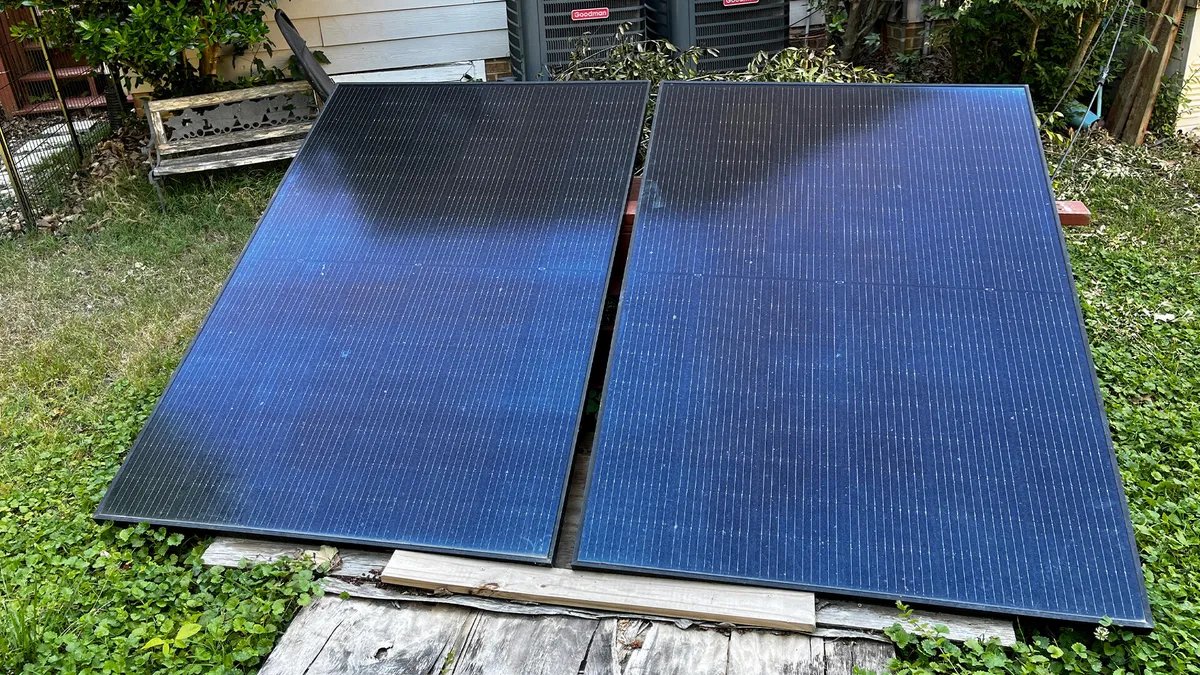
Solar panels are a source of additional combustable materials, which poses a potential issue, especially in high-risk buildings.
Adrian Kingsley-Hughes/ZDNET
UK electrical standards are some of the most rigorous in the world, especially when it comes to safety, so it’s no surprise that these industry groups have concerns. Whenever consumers get the opportunity to plug new things into the grid, there are always concerns related to the quality of the products and what dumb stuff users might get up to with the hardware.
I also understand the concerns relating to poor-quality equipment flooding the market. Plenty of online outlets are already flooded with countless chargers and power banks that present fire or shock hazards, and it’s incredibly hard to get these products removed even when it’s clear just how bad they are. I have no doubt that things will be the same with plug-in solar.
Also: What years of testing thermal cameras taught me about the problems hiding in plain sight
Since UL Solutions launched UL 3700 — the first certification framework for plug-in solar — a handful of US states have passed laws that allow homeowners to plug panels into their outlets. But it is similar plug-in solar systems — kits meeting or exceeding UL 3700 specs — that the UK electrical groups are concerned about.
Should you be worried?
If you live in an old property, experience overheating issues in any of your fixtures or wiring (maybe it’s a good time to get a thermal camera), bought your kit from a less than reputable retailer, or feel that you might have done a subpar job of installing your kit, then it might be a good idea to get an electrician to cast an eye over things, just to be on the safe side.
[ad_2]
Source link
