

[ad_1]

Follow ZDNET: Add us as a preferred source on Google.
ZDNET’s key takeaways
- You can still use Android Auto, even when there’s no mobile data.
- Using pre-downloaded maps and playlists greatly reduces latency issues.
- You’ll lose access to web-based functions like traffic and assistant responses, though.
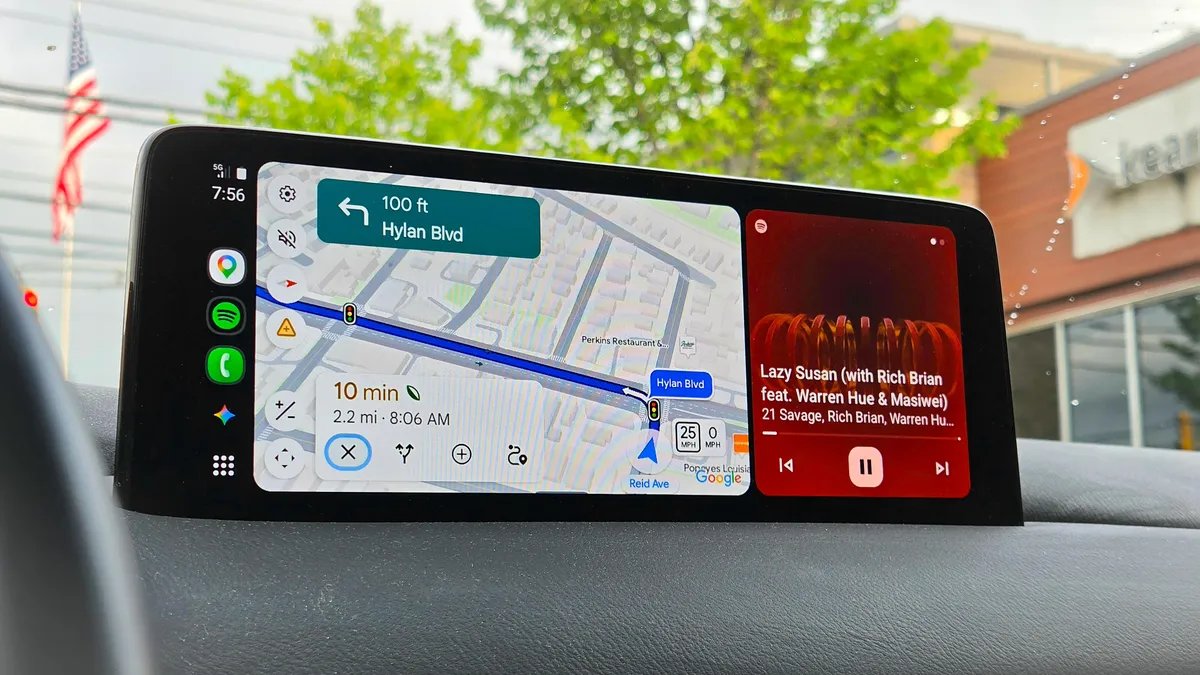
Last weekend, my wife and I decided to visit the cozy upstate town of Catskill, just off the Hudson River in New York. But instead of doing the usual and letting Android Auto and all its Gemini wisdom guide us, we agreed to become minimalists for a day.
Not to the extremes of using a physical map to navigate the two-and-a-half-hour road trip, but with our phones tucked away, notifications turned off, and using Android Auto offline only. Just months ago, we found ourselves underprepared for a drive through the desert valleys of the West Coast, so we figured this would be a great follow-up.
Also: 5 ways I speed up my Android phone beyond clearing system cache – all for free
Let me be clear: Using Android Auto offline is not a lifestyle everyone should proactively adopt, as I quickly discovered there are far more limitations than benefits. But there was also a charm to using the automotive software in its rawest form. And at times throughout the ride, we were both surprised by what the operating system could handle with no data.
1. Tackling zero-coverage zones
The biggest advantage of running Android Auto offline is still being able to navigate with predownloaded maps, especially in areas with little to no signal. In fact, Google Maps still does a decent job of offering multiple routes and pathways to destinations — a useful feat for when you’d rather not go through three toll passes in New Jersey to save yourself 10 minutes.
And you don’t necessarily have to download your whole route, either. We were familiar with the drive getting out of the tri-state area, so I only downloaded the second half of the route, including any restaurants and gas stations along the way.
Also: 40+ hidden Google Maps settings that every user should be taking advantage of
The ride was mostly smooth, with no hiccups or questionable reroute suggestions. I say mostly because the one bit of information that was sorely missed was traffic reports, as an accident along the FDR Drive set us back 30 minutes.
You also can’t freely seek Google Assistant or Gemini for nearby recommendations or scans of local restaurant menus, as I like to do nowadays. But the idea of just wandering about and reading the menu stands as we passed by them had its own charm.
2. Lowering thermal loads
Using Android Auto and CarPlay typically takes a heavy toll on your phone’s battery, as the constant GPS scanning, networking searching, audio streaming, and even sunlight beaming against the device can raise the internal temperature dramatically (and leaving your phone on a wireless charger adds to that).
Also: Why I’m using wired Android Auto when all the cool kids are switching to wireless
Operating offline greatly reduces your phone’s processing load, particularly on cellular data and battery usage. Not only are you using less data, which would typically add up if you’re traveling for days, but your phone will also conserve battery because much of the computing is done locally.
For my road trip, I downloaded music playlists and podcasts that I would typically stream in high quality, so I could just stream them all without stressing my phone. A cooler phone means a smoother overall Android Auto experience.
Should you do it?
By the end of the weekend, the consensus was clear: Android Auto offline is a viable path if you’re worried about your phone’s data, cellular connectivity, and overall endurance.
Dialing down the operating system’s functionality turned out to be a good thing for the trip, as it allowed us to focus more on our surroundings and discover new places and things, instead of letting Google and Gemini map everything out. Going offline effectively removed any text messages, email alerts, and map pings that would otherwise distract me while driving. (I also understand that some travelers may prefer a more guided and structured navigation.)
I likely won’t switch to airplane mode for my next commute to work, but when I’m traveling out of state and fully expect service to cut off here and there, it feels good to know that a little preparation can keep Android Auto functioning effectively.
The artisanal baked goods at the HiLo Cafe, by the way — delicious.
[ad_2]
Source link
