

[ad_1]

Follow ZDNET: Add us as a preferred source on Google.
ZDNET’s key takeaways
- There are several ways to install Android Auto in an older car.
- You can purchase an external display or use an old device.
- Using an old device is the most affordable option.
Android Auto and infotainment screens have become standard equipment in almost any car from the past 15 years, but if you have a vehicle from the time before that, you might feel like you’re missing out.
If you haven’t considered it before, you might think that you’re fine just using your car’s Bluetooth or aux connection, but Android Auto gives you an always-on, glanceable display that’s not nearly as distracting as your phone.
Also: Why I’m using wired Android Auto when all the cool kids are switching to wireless
Fortunately, it’s not hard to add Android Auto to a car that doesn’t have it.
To get Android Auto in an older car, all you need is a phone to host Android Auto (your current phone), some sort of display (either a dedicated wireless screen or an old phone or tablet), and a Bluetooth connection for this screen to connect to your car (you can pick up an adapter if you just have an aux connection but not Bluetooth).
There are two main ways to do this: you can buy a wireless screen designed for this purpose, or you can use an old phone or tablet. Here’s a look at the advantages of each method.
The easiest way: Mounting a wireless screen
The easiest way to add Android Auto to any car is to purchase a wireless screen. You can buy an entire head unit with Android Auto, which is a screen that replaces your existing stereo, but that’s fairly involved and can get expensive. Instead, with the wireless screen method, you’re essentially buying a display with Android Auto on it to mount on top of your dashboard.
Also: I use Android Auto in my living room now – and it solves one of my biggest productivity problems
Prices vary depending on the size, but you can get a 7-inch screen that connects via Bluetooth to your car for under $50, and reviews are generally pretty good. One of the biggest advantages of adding Android Auto to your car this way is that it requires no wiring outside of plugging into a power source like a cigarette lighter. Your display will sit on your car’s dashboard and function just like an original screen.
But there’s a cheaper method as long as you have an old phone or tablet sitting around.
The most affordable way: Using an old phone as a display
I recently explored adding Android Auto to an old phone and using it as a distraction-free music, call, and text hub while I work. It gave me a surprising productivity boost by keeping my phone in my pocket, and it helped give an old device new life. I realized that it would also be possible to use this as an actual Android Auto screen if I didn’t already have one (as long as the car has Bluetooth).
The process here is pretty straightforward. Start by taking an old phone or tablet and installing either the Headunit Revived or the Headunit Reloaded app (I went with the former). This turns your old device into a head unit or receiver for Android Auto, taking the place of what would usually be a car screen. Install a corresponding app, WiFi Helper, on your current device and go through these setup steps.
Also: 3 Android Auto automations that make my drives much easier – and how I set them up
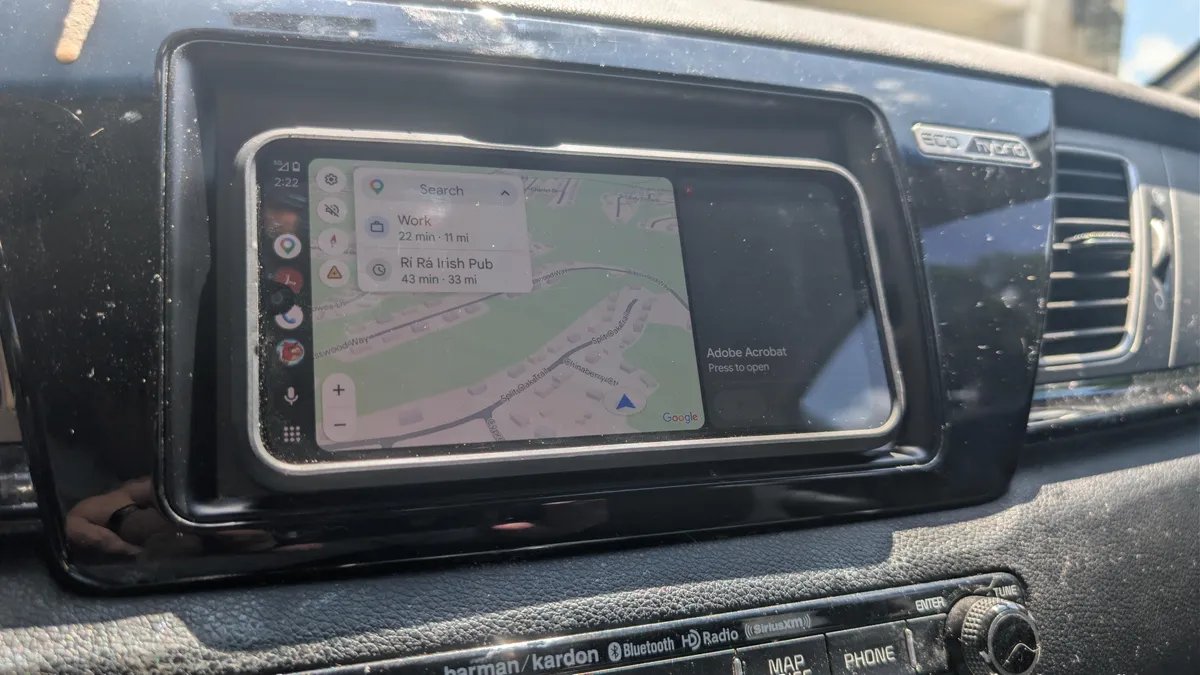
I tried to find a friend or family member with a car old enough to have no screen so I could fully test this workaround, but my search turned up nothing. I was able to test out the functionality of this trick, though, by switching my car’s Bluetooth connection to my old device with Headunit Revived installed. Since I already had the connection established from my in-home test, I didn’t need to set up Android Auto again, but you will need to do that your first time.
I tried my new Android Auto workaround on a drive today, and while it definitely wasn’t as snappy as my built-in connection, it got the job done. This way won’t have a dedicated power supply like installing a screen (it could, but I’m assuming you’re charging your main device in the car), but it’s definitely doable.
The biggest advantage of this method is that, considering all you need to buy is an affordable app and maybe a mount for your old device, the total cost is under $20.
[ad_2]
Source link
